




Mathematics and Computer Science Home
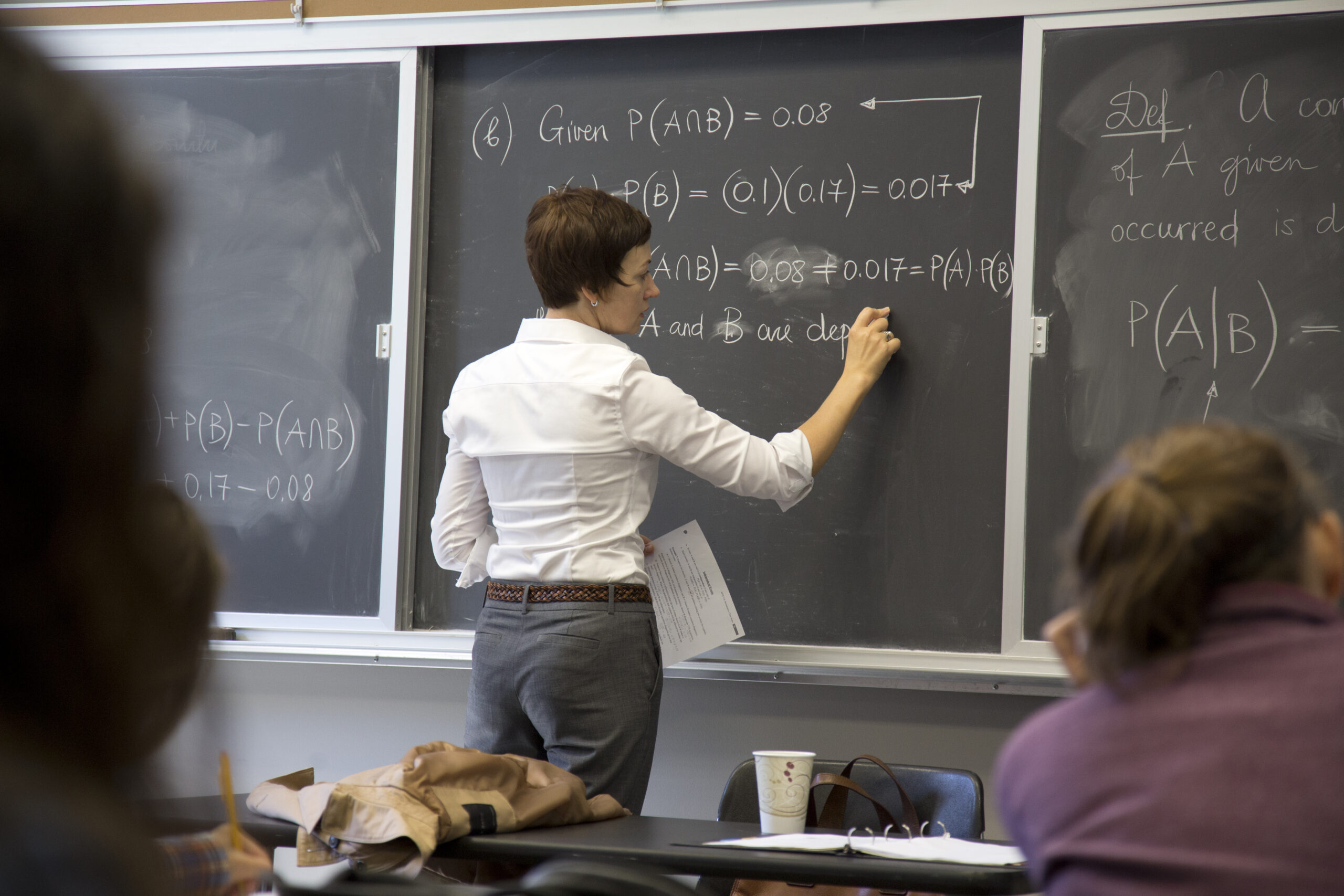
Mathematics and Computer Science at Providence College
Mathematics is an indispensable tool for science and business, but it is also a rich and beautiful field worthy of study for its own sake. A mathematics major will learn to think logically, gain an aesthetic appreciation for the subject, and develop the skills to solve quantitative problems.
The computer science major at PC provides students with the knowledge of networks, databases, operating systems, networking, as well as the mathematics that form the base of the field. Our program incorporates rigorous practice in solving problems using algorithms and teaches students how to implement solutions using high-level programming languages.
DEGREE PROGRAMS
Bachelor of Science Computer Science
Learn concepts and technical skills; advanced theories; hardware organization from the central processing unit to individual components including registers, memory, digital components, and component connections; the theory of computer networks and network algorithms; and more. Students may also focus on special topics in computer science and complete an independent study or research in the field.
Bachelor of Arts Mathematics
Our mathematics program allows majors enough room in their schedules to either take a minor or possibly a second major in another subject. In recent years we have seen mathematics majors with second majors in biology, computer science, finance, music, economics, Spanish, psychology, and other subjects. The second major or minor is chosen based on an interest of the student or with a particular career in mind
Bachelor of Arts Mathematics/Secondary Education
Students who are planning to teach mathematics at the high school level enroll as mathematics/secondary education majors. These students take all the coursework of the mathematics majors, and additional courses from the education department. They also student-teach in a high school during their senior year.
Minor
Mathematics :
The minor in mathematics provides students with a foundation in calculus and an introduction to higher mathematics while allowing them to choose upper level electives in their areas of interest.
Computer Science:
The computer science minor provides a solid foundation in programming skills and technical knowledge while allowing students to choose upper-level electives in their areas of interest.
Data Science:
In the data science minor students acquire the technical knowledge to identify relevant questions and the programming skills and statistical knowledge to collect, organize, and interpret the data which answers these questions.
BEYOND THE CLASSROOM

Present papers at sectional meetings of the Mathematical Association of America

Serve as a math tutor for other students

Travel to participate in inter-collegiate mathematics competitions
FACULTY
Our faculty members have decades of combined experience teaching many aspects of mathematics and computer science. Their scholarly interests include big data, statistics, computer networking, operating systems, and computational sustainability.
in the news
AFTER PC
Whether you study mathematics or computer science, you can pursue a variety of careers. Graduates of our program include teachers, professors, lawyers, actuaries, business managers, computer scientists, architects, and financial advisors. Computer science majors also may become a software applications developer, computer systems analyst or engineer, network systems administrator, database administrator, business intelligence analyst, web developer, computer programmer, and more. A hallmark of our program is the willingness of faculty to engage in independent study or research with students who want to study more advanced topics in preparation for graduate school. In recent years, our majors have earned Ph.D.s at top universities.
98%
of 2018-2022 math and computer sciences graduates are employed and/or attending graduate school
70%
are employed only
19%
are attending school only
9%
are employed and attending school
Due to rounding, some totals may not correspond with the sum of the separate figures.
Selected Places of Employment/Service
American Express
Apple Inc.
Bloomberg
Boston Dynamics
Dell
EMC
EY
Fidelity Investments
Google
HP
IBM
Insurance Agency
Liberty Mutual Insurance
Lockheed Martin
MEDITECH
MVR
Prudential Financial
PwC
Raytheon Technologies
Thermo Fisher
U.S. Department of Transit
Willis Towers Watson
World Bank
Selected Graduate Schools
Boston College
Boston University
Brown University
Clemson University
Colorado State University
Duke University
Fordham Law School
George Mason University
Loyola University Chicago
Northeastern University
Providence College
Rutgers University
Tufts University
University of Connecticut
University of Maine School of Law
University of Notre Dame
University of Pennsylvania
University of Rhode Island
University of Southern California
Wake Forest University
Worcester State University
ADDITIONAL CONTACT INFORMATION
Liam Donohoe
Department Chairperson
Howley Hall Room 200
401.865.2466
ldonohoe@providence.edu